
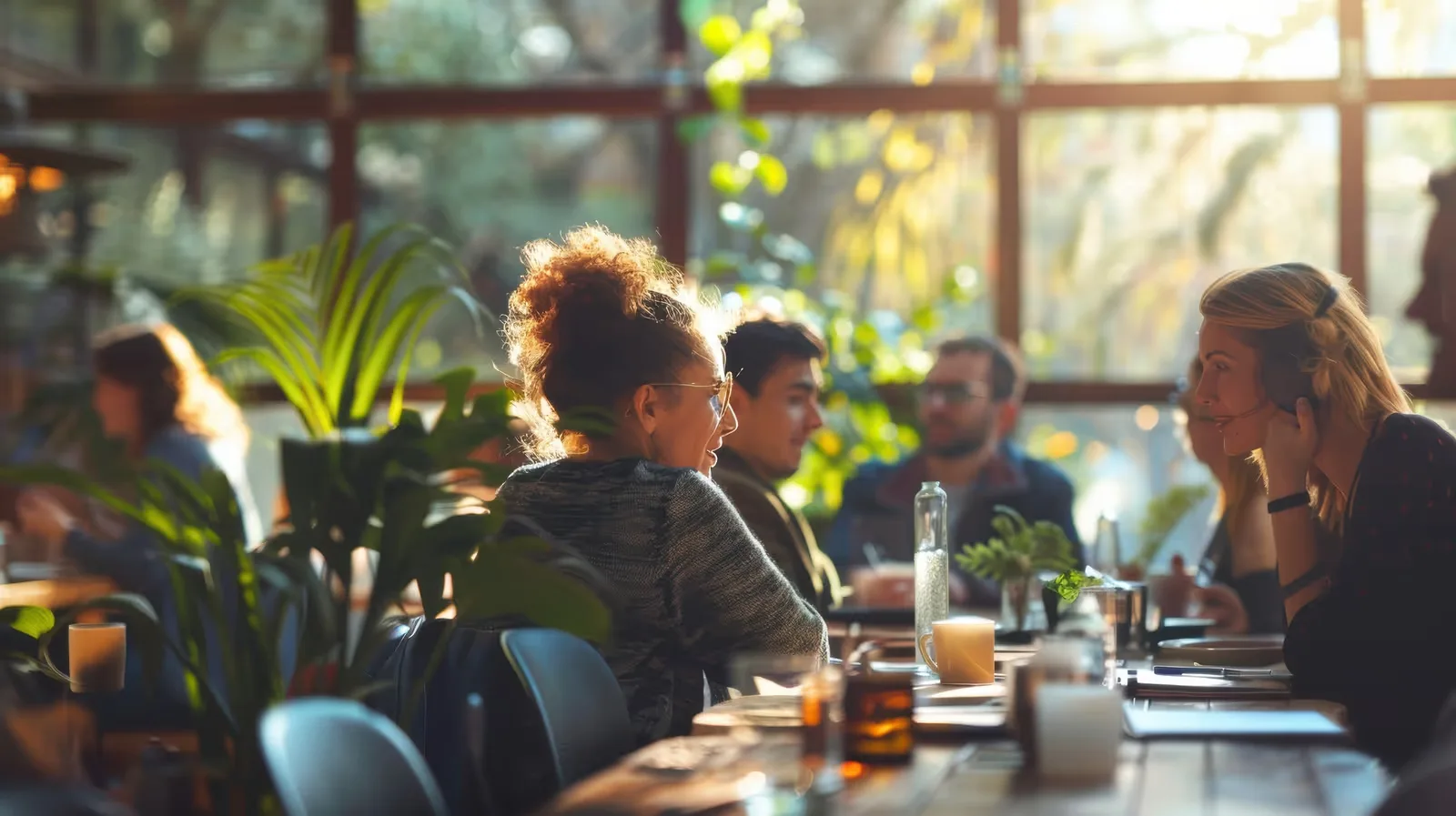
Food quality still matters, but it no longer sets you apart. The operators pulling ahead in 2026 are winning on something harder to copy: the systematic management of the guest experience.
Let's start with a provocation: your food is probably not what's going to save your restaurant in 2026.
That's not a knock on your kitchen. It's a recognition of something the data is making increasingly hard to ignore. According to McKinsey's 2026 restaurant industry analysis, food quality remains the most commonly cited source of disappointment after a bad meal. Which means most operators are correctly focused on getting the food right. But when everyone at the table is playing the same card, food quality stops being a differentiator. It becomes the price of admission.
The restaurants quietly pulling ahead right now aren't just serving great food. They're building something harder to replicate: a system around the guest experience that makes every visit feel intentional, personal, and worth repeating.
The Real Competitive Landscape Has Changed
The threat to your restaurant in 2026 isn't the new place that opened across the street. It's the creeping erosion of visit frequency and the growing number of alternatives competing for the same occasions.
OpenTable's 2026 Dining Trends Report found that 61% of Americans now expect dining out to feel more like a special treat than a regular habit. Nearly half of consumers reduced their restaurant spending in 2025, according to Tillster's Phygital Index Report, and a third said their favorite restaurant changed in the past year. Guests are making fewer visits, and they're being far more deliberate about where those visits go.
Meanwhile, competition has expanded beyond the block. Convenience stores with fresh food programs, ghost kitchens operating at scale, and delivery-only brands with no overhead are all competing for the same meal occasions, and in some cases winning. Tillster found that 24% of diners now visit convenience stores or grocery chains for takeout more often than they did a year ago.
In this environment, the question isn't just "is our food good?" It's "why would a guest choose us over every other option they have tonight, and come back next week?"
The Experience Gap Is Where Loyalty Lives
The operators winning on experience aren't necessarily doing more. They're doing the basics more consistently and more personally than everyone else.
Consider the retention picture: industry data shows that 69% of restaurant guests never progress beyond a single visit. Only 25% of first-time visitors return within 90 days. But when restaurants use connected guest data to personalize outreach and follow-up, that return rate climbs to 35-45%, according to Bloom Intelligence's 2025 guest retention research.
That gap between 25% and 45% return rates doesn't come from a better menu. It comes from knowing who your guests are, remembering their preferences, and giving them a reason to feel like regulars rather than strangers.
The levers are more operational than creative:
- Does the host know that the couple at table 4 always request a quiet corner?
- Did the guest who dined last month and hasn't been back receive a timely, relevant reason to return?
- When a birthday party books a table, is the experience designed around that occasion, or does it unfold the same way as every other Saturday night?
None of this requires a massive tech budget. It requires a commitment to treating guest data as a core operational asset, not an afterthought.
Consistency Is the New Creativity
Here's what the data keeps surfacing: guests don't leave restaurants because the food disappointed them once. They leave because the experience was unpredictable. A great visit followed by a mediocre one erodes trust faster than a consistently average experience.
QSR Magazine's industry outlook for 2026 put it plainly: operators who succeed this year will be those who "balance innovation with discipline," and for most restaurants, the discipline side of that equation is the harder part.
In 70% of QSR cases, order accuracy alone is cited as a key factor in whether a guest returns, per Restroworks' 2025 retention data.
Consistency across touchpoints, how the phone is answered, how long the wait feels, how the reservation handoff works between host and server, is the invisible infrastructure of loyalty. Guests don't consciously notice when it works. They notice, viscerally, when it doesn't.
This is where investment in operations pays off in ways a new menu item never will. A reservation system that gives your host team context before the guest walks in the door, their visit history, their preferences, any notes from last time, turns every interaction from a cold start into a warm welcome.
What the Winning Operators Are Actually Doing
The operators who will define the next cycle of restaurant success aren't necessarily the ones with the most innovative menus. They're the ones who have built systems that make the guest experience reliable, personal, and scalable.
In practice, that means:
- Using reservation and waitlist data to understand visit patterns, not just to fill seats, but to anticipate demand and staff accordingly.
- Building a guest profile over time: preferences, occasions, frequency, feedback. This is the foundation of personalization, and it compounds in value with every visit.
- Designing proactive retention touchpoints, a well-timed follow-up after a first visit, a recognition moment for a returning regular, rather than waiting for guests to drift away and trying to win them back.
- Treating the front-of-house as a data-generating operation, not just a hospitality function.
Platforms like Hostme are built around exactly this premise, giving operators the tools to manage reservations, waitlists, and guest profiles in one place, so the intelligence built up over time actually informs what happens at the host stand and on the floor.
The best hospitality has always been about making guests feel remembered.
The difference in 2026 is that the tools to do that systematically, across every service and every location, are now within reach for operators of any size.
The Shift Worth Making Now
None of this means food stops mattering. It means that in a market where food quality is increasingly table stakes and guest visits are increasingly selective, the restaurants with a structural advantage are those treating the guest relationship as an operational priority, not just a hospitality instinct.
The guests who will define your revenue in 2027 are in your dining room right now. The question is whether you have the systems in place to recognize them, remember them, and give them a reason to come back before the restaurant down the street does.