

OpenTable built its business on one thing: the biggest diner network in the industry. But that network comes with a cost structure that a lot of restaurants have started to question — a monthly subscription plus a per-cover fee that adds up fast once you're doing real volume.
In 2026, restaurants doing 1,500 covers a month on OpenTable's network can pay $1,500–$2,250 in per-cover charges alone, on top of a $149–$499/month subscription
That's pushed a lot of operators toward flat-fee or commission-free platforms instead. Below is a rundown of the top alternative — Hostme — followed by five other serious contenders, compared on pricing, features, and who each one actually fits.
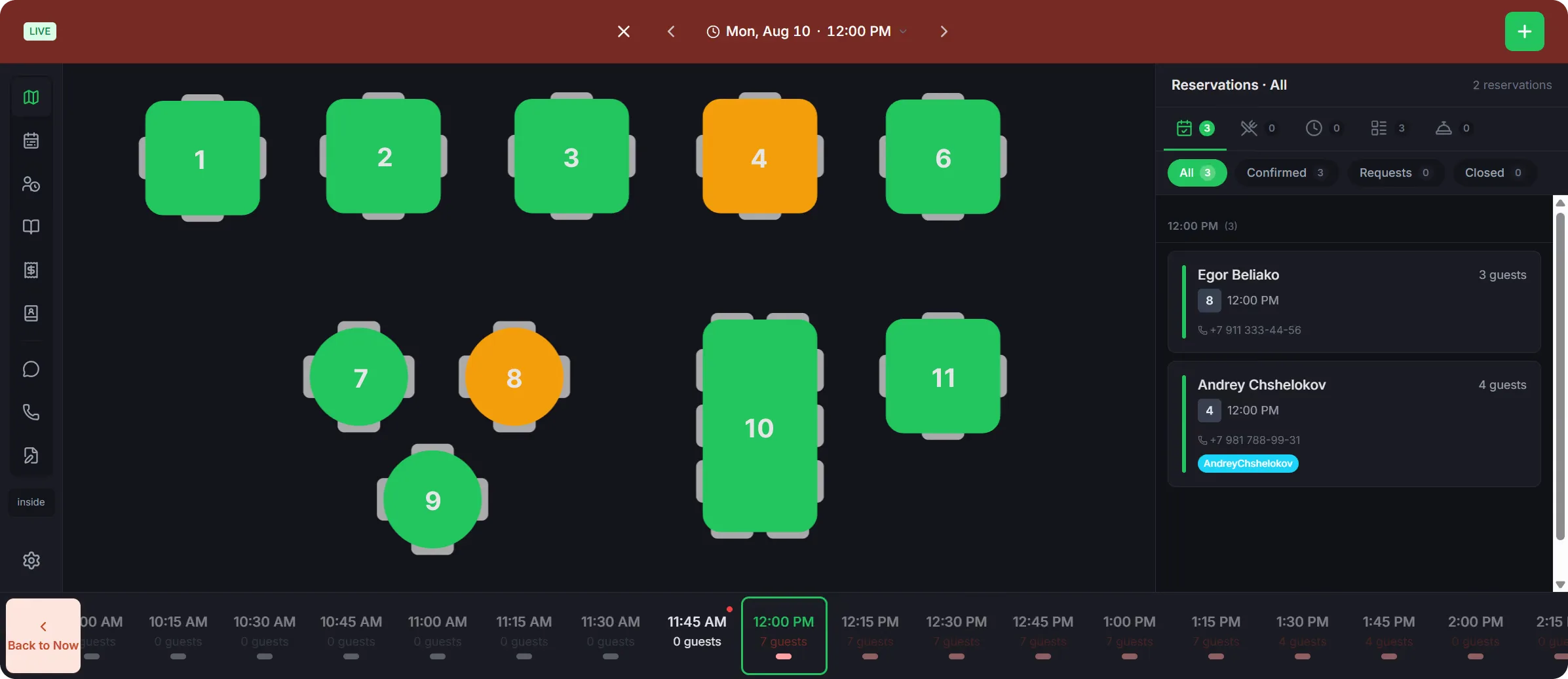
1. Hostme — Best overall alternative
Pricing: Flat monthly subscription, no contracts, no per-cover fees. Plans run from Piccolo (entry-level) to Mezzo ($109/month) to Grande ($169/month, includes POS integration). The only variable cost is an optional marketing add-on billed as a $20 credit package for SMS/WhatsApp/email campaigns, plus a $2.50-per-cover charge if you opt into the TripAdvisor/Michelin discovery channel.
What it does well:
- Reservations, waitlist, table management, digital guestbook, event ticketing, and online ordering in one system
- 14 POS integrations (Square, Lightspeed, Oracle Micros, NCR Aloha, Heartland, Lavu, and others) — though notably, Toast is not yet supported
- Server rotation and table assignment tools that reviewers specifically credit with ending scheduling conflicts among staff
- Deposits and cancellation fees to cut down on no-shows
- Available in eight languages, with 24/7 chat and phone support
- Operating in 47 countries, processing 3.1M+ bookings a month
Where it falls short: Hostme has real feature depth, and some smaller operations find that a learning curve — one Capterra reviewer noted that setting up timed seating for a buffet-style event took more configuration than expected. And unlike OpenTable, Hostme has no consumer-facing discovery marketplace of its own; it fills seats through your website, Google, and social channels rather than sending you new diners who found you by browsing.
Best for: Independent full-service restaurants, small groups, wineries, and bars that already have steady demand and want to stop paying per seated guest. If you're relying on a diner marketplace to find new customers, that's the one thing Hostme doesn't do — OpenTable's own network still wins there. But if demand isn't your problem and per-cover fees are, Hostme's flat-fee model is hard to beat.
2. Resy — Best for upscale, brand-conscious venues
Pricing: Flat monthly plans — Basic $249, Pro $399, Enterprise $899 — with no per-cover fees on any tier. There's no free trial and no free plan; the $249 floor is steep for low-volume restaurants, but the more covers you do, the lower your effective cost per cover becomes.
What it does well:
- Backed by American Express, which also now owns Tock after a 2024 acquisition — giving Resy's combined network roughly 25,000 restaurants
- Strong reputation in trendy, upscale dining and major metros (New York, Miami, LA), though it's become more accessible to neighborhood restaurants post-Tock
- Reservation, table, and waitlist management, group reservations, event ticketing, guest CRM, and POS/payment integrations
- Integrates with Instagram and Meta for Business for social discovery
- Reports an industry-low 3.8% no-show rate across its restaurant base
Where it falls short: Pacing controls are limited to cover-count thresholds only — no way to combine covers and table-count limits, which some operators have specifically asked Resy to add. Pricing also isn't cheap relative to flat-fee competitors, and users have reported being caught off guard by price increases.
Best for: Fine dining and image-conscious restaurants that want the AmEx-affiliated discovery network and don't mind paying a premium for it.

3. SevenRooms — Best for guest CRM and marketing depth
Pricing: Not published; operator-reported figures put it around $500–$2,000+/month depending on modules and volume, generally on annual contracts.
What it does well:
- No per-cover fees or commissions on reservations — a real differentiator against OpenTable's $1.50+ per diner
- The deepest CRM of any platform on this list: every booking auto-generates a detailed guest profile with tags based on preferences and order history
- Reaches diners through your website, DoorDash Reservations, Deliveroo Reservations, Google, Instagram, and Yelp, plus a newer Voice AI feature that answers phone calls and books reservations automatically
- Marketing automation for email/SMS campaigns, upsells (tasting menus, wine pairings), and event/private-dining management
- Used by large hospitality brands (Wolfgang Puck, Hard Rock, Mandarin Oriental) as well as independents
Where it falls short: It's not plug-and-play — staff training and floor plan setup take real time, and several reviewers describe the feature-rich interface as harder to use under pressure than simpler tools. It's also purely a direct-booking platform: unlike OpenTable, SevenRooms doesn't drive new-guest discovery on its own, so your own marketing has to do that work. At low reservation volume, the subscription cost can outweigh what you'd save in commission fees.
Best for: Multi-location groups and hospitality brands that want to own guest data and run serious retention marketing, not just take bookings.
4. Tock — Best for prepaid, ticketed fine dining
Pricing: Roughly $79–$769/month across tiers, with no per-cover fee but a 2–3% transaction fee on prepaid bookings at lower plan levels. Created by Alinea's Nick Kokonas and now owned by American Express alongside Resy.
What it does well:
- Purpose-built for prepaid reservations and ticketed events — guests pay the full menu price (or a deposit) up front, the same way they'd buy a concert ticket
- This model virtually eliminates no-shows, which matters enormously for tasting-menu restaurants charging $150–$200+ per head
- Handles ordinary reservations and walk-ins alongside ticketed experiences
- Detailed reporting down to comps, discounts, and line-item sales
- Millions of active app users, plus integrations with Michelin, Wine Enthusiast, and Reserve with Google
Where it falls short: Multiple reviewers describe a "bait and switch" sales experience where features they thought were included turned out to require a plan upgrade. POS integration is more limited than OpenTable's or Resy's, there's no real-time floor management for complex layouts, and the guest-facing booking flow can feel transactional rather than hospitality-forward. For casual full-service restaurants without a prepaid/ticketed model, you'd be paying for a lot of machinery you won't use.
Best for: High-end tasting-menu restaurants and chef's-counter concepts that need to protect high-value seatings with upfront payment. It's a poor fit for casual full-service dining.
5. Eat App — Best free-to-start option
Pricing: Four tiers from $0 to $229/month (some sources cite an entry point closer to $34/month depending on plan structure). The free plan supports up to 30 covers a month with real-time floor plan management included — features many competitors reserve for $100+ tiers.
What it does well:
- Table management, guest database, and CRM in one dashboard, with a genuinely usable free tier
- Real-time floor plan and multi-location sync for restaurant groups
- Deposits/prepayments, automated post-visit surveys, and marketing campaign tools
- Connects to Google, Instagram, Facebook, and other discovery channels
- Reviewers consistently single out Eat App's support team as fast and responsive
Where it falls short: Some reviewers flag it as expensive once you start adding features beyond the base plan, and WhatsApp messaging pricing in particular draws complaints. Eat App's brand presence is also noticeably smaller in the U.S. than in the Middle East and Europe, which shows up as less marketplace visibility for restaurants relying on organic discovery.
Best for: Smaller or budget-conscious restaurants that want to start free and grow into paid features as covers increase.

6. Yelp Guest Manager — Best if Yelp already drives your traffic
Pricing: Starts around $129–$249/month depending on source and plan, generally with unlimited covers and no per-cover fee.
What it does well:
- Bundles Yelp Waitlist, Reservations, Kiosk, Takeout, and Table Management into one product, tied to Yelp's existing high-intent diner traffic
- Lists tables across Yelp, Google (via Reserve with Google), Apple Maps, Facebook, and TikTok
- Yelp's internal data claims restaurants that switched from OpenTable reported average savings, though this is self-reported vendor data, not an independent audit
- Credit card holds, automated alerts, and two-way texting to cut no-shows
Where it falls short: Consumer reviews of the diner-facing Yelp Reservations experience mention inconsistent wait-time accuracy and occasional last-minute cancellations that frustrated guests. Annual contracts carry early termination fees ($600–$1,500 depending on plan), and the product's strength is really tied to how much of your traffic already comes through Yelp — it's less compelling if your guests don't discover you there.
Best for: Restaurants that already get meaningful traffic from Yelp and want to consolidate front-of-house tools without paying OpenTable's per-cover fees.
How to actually choose
How to actually choose · platform comparison
How to actually choose comparison
⬩ pricing & fit
| Platform | Pricing model | Per-cover fees | Best for |
|---|---|---|---|
| Hostme | Flat monthly, $109–$169 | None (except optional $2.50 discovery channel) | Independents wanting predictable costs + full FOH toolkit |
| Resy | Flat monthly, $249–$899 | None | Upscale, brand-driven dining |
| SevenRooms | ~$500–$2,000+/mo | None | Groups wanting deep CRM/marketing |
| Tock | $79–$769/mo | None (2–3% on prepaid) | Prepaid tasting-menu concepts |
| Eat App | $0–$229/mo | None | Budget-conscious, growing restaurants |
| Yelp Guest Manager | ~$129–$249/mo | None | Restaurants with strong Yelp traffic |
| OpenTable for reference | $149–$499/mo | $0.25–$1.50+/cover | Restaurants that need the largest diner discovery network |
The pattern across nearly every alternative on this list is the same: they trade OpenTable's massive diner network for a flat fee and no per-cover charges. That's a good trade if you already have steady demand and want predictable costs. It's a worse trade if your restaurant genuinely relies on marketplace discovery to fill seats — in that case, OpenTable's reach (or Resy's, post-Tock) may still justify the fee.
Given the flat-fee, no-commission, all-in-one profile most restaurants are looking for, Hostme is the strongest starting point on this list — with Resy and Eat App as the two clearest alternates depending on whether you're optimizing for brand prestige or budget.